Friday, 19 June 2026 – Nossob to Mata Mata
What a day!
One never creates expectations when visiting a game park, but the hope of witnessing something special always keeps you alert. The morning began like any other tour I conduct. After breakfast, we left Nossob as the sun rose and the gates opened, making our way slowly towards our next destination.
We were ambling along with eyes peeled when I suddenly stopped, selected reverse, and backed the 4×4 a short distance. Off to the left, silhouetted against the rising sun, I spotted a bird that is often heard in the evenings but seldom seen—a Pearl-spotted Owlet. She was clutching her breakfast, a striped mouse, in her talons. We were thrilled with our first sighting of the day and little did we know it would only get better.
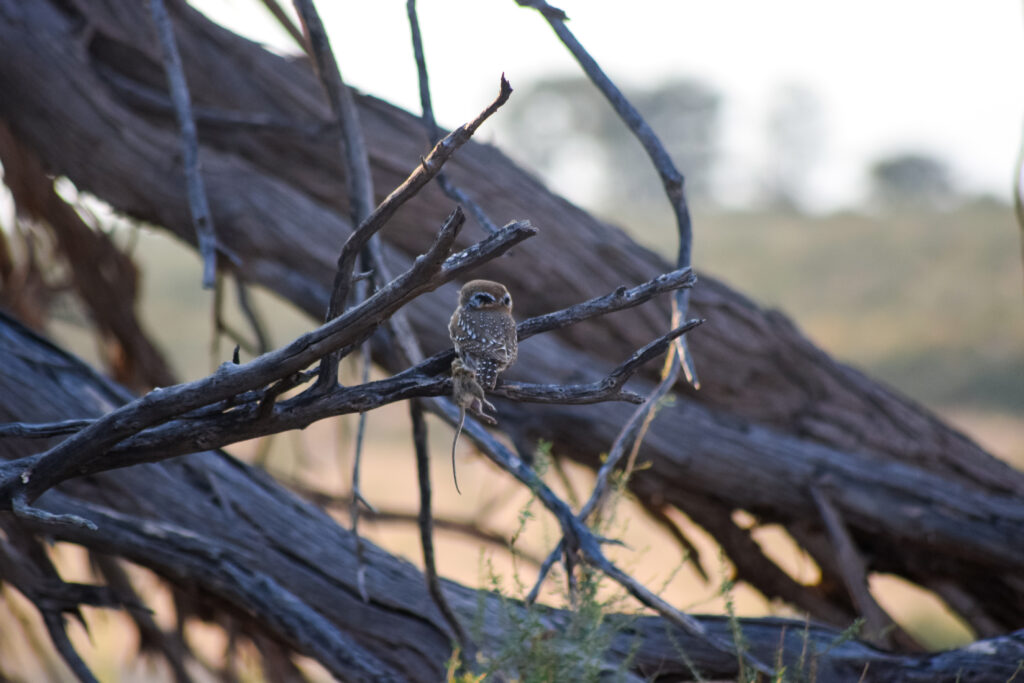
Above: Pearl Spotted Owlet
We stopped at Dikbaardskolk Picnic Site for a well-deserved cup of coffee and a rusk before continuing over the dune road from the Nossob River to the Auob River. Along the way, we encountered the usual suspects: Steenbok, Gemsbok, Ostrich, and the ever-present Pale Chanting Goshawk.
Reaching the Auob around midday gave us the opportunity to stretch our legs and enjoy a picnic lunch at Kamqua Picnic Site while chatting about the morning’s sightings. With only 50 kilometres remaining to Mata Mata, we estimated arriving in camp at around 2:30 pm—depending, of course, on what nature had in store for us.
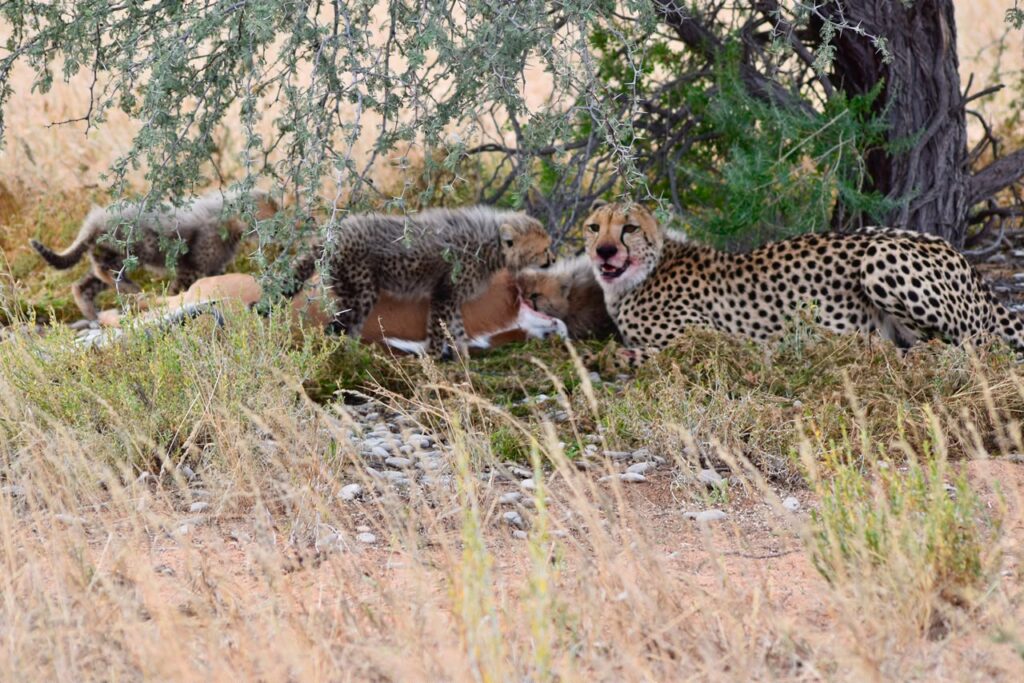
Heading north along the Auob and passing the turn-off to Urikaruus Camp, we descended once again into the ancient riverbed. There we noticed a couple of vehicles gathered at a sighting. As we approached, we could see a female cheetah lying beneath a Camel Thorn tree, panting heavily. Although the temperature was a comfortable 20°C, the effort of the chase had clearly taken its toll.
I managed to position our vehicle perfectly for viewing and soon realised that, partially hidden by a tree in front of us, lay her prize—a territorial male springbok. We had missed the kill by only a few minutes, but the real story was just beginning. Speaking to the gentlemen in the vehicle ahead of us, who had witnessed the hunt, we learned that the cheetah had needed two attempts to bring down the springbok, explaining her exhaustion.
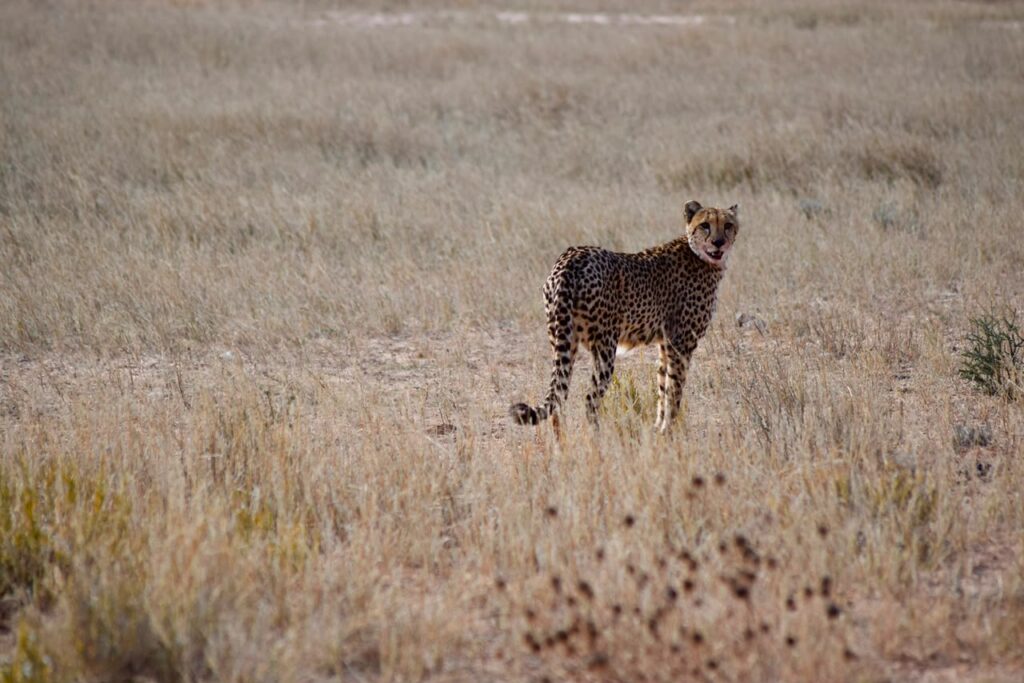
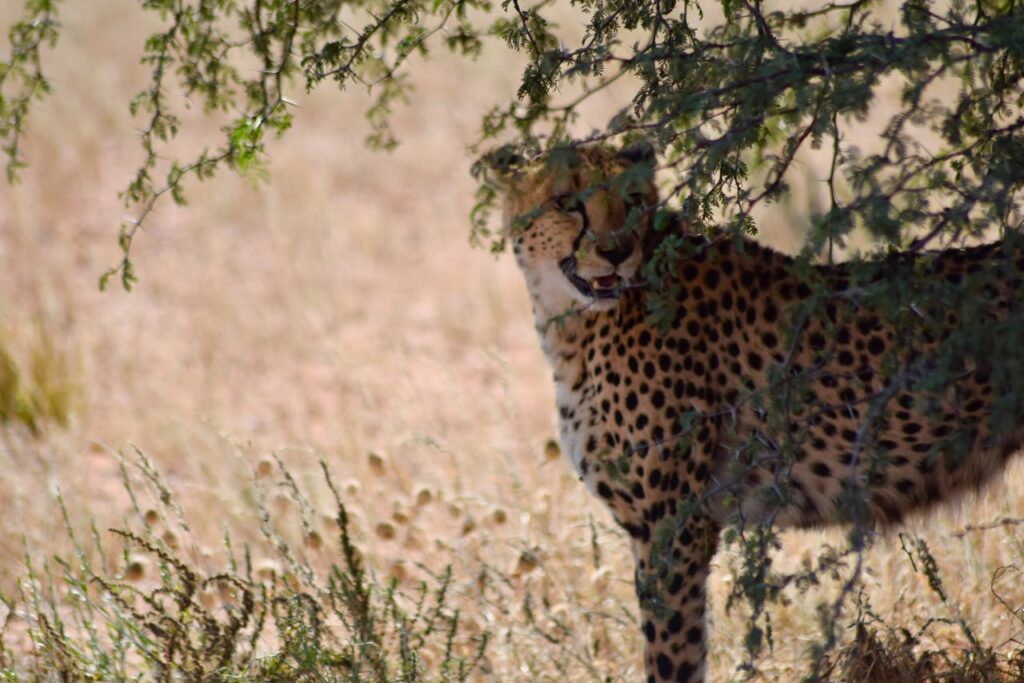
After about twenty minutes, she rose, walked slowly to the carcass, and dragged it back beneath the shade of the Camel Thorn. There she began feeding, but after only a short while she stopped, sat upright, and let out a series of loud, short shrieks while looking towards the south.
Immediately I realised what she was doing—she was calling her cubs.
She alternated between feeding and calling for another thirty minutes, until it became clear that her youngsters were too far away to hear her. Finally, she left the carcass and headed off in the direction of her calls, disappearing down the Auob and out of sight. Rather than moving on, we decided to wait.
In the distance I heard the faint whoop of a spotted hyena and hoped her hard-earned meal would not be stolen before she returned. Then the excitement began all over again.
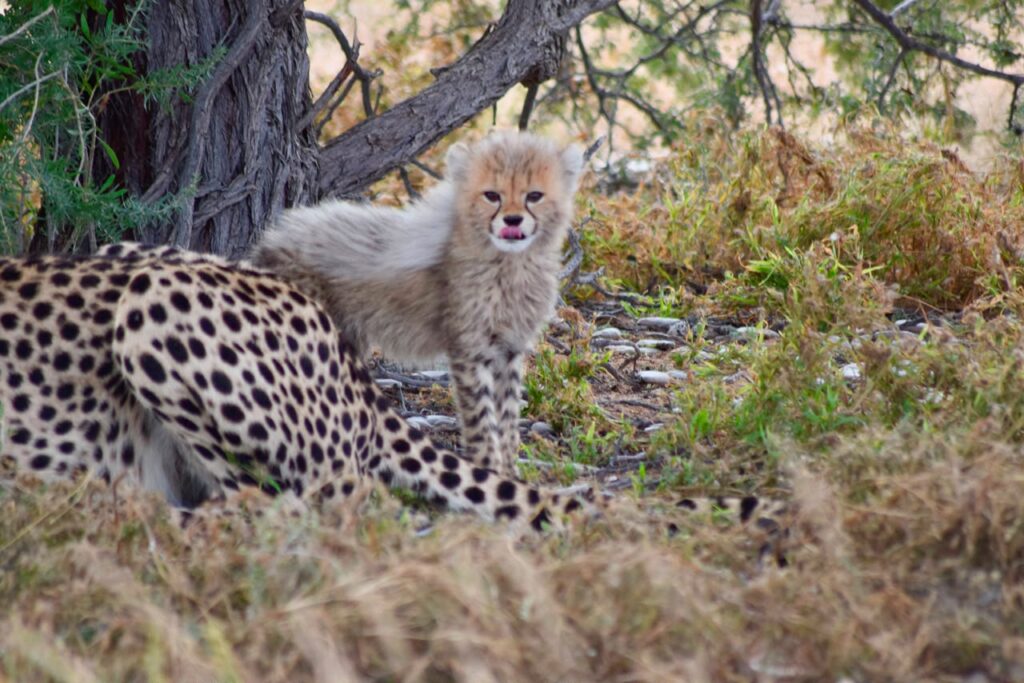
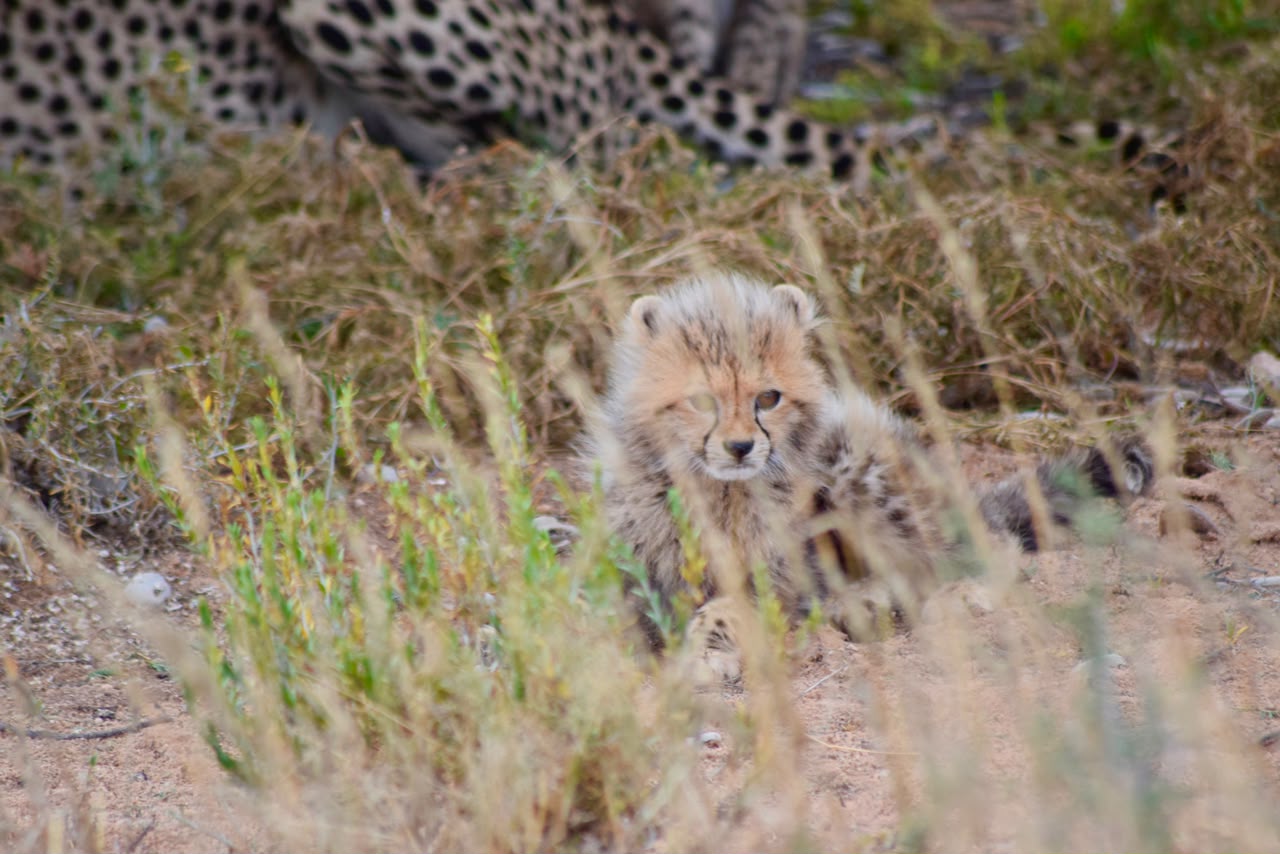
The cheetah reappeared, this time leading three tiny cubs behind her. Their fluffy backs and small size—no bigger than domestic cats—suggested they were about three months old. She settled down beside the springbok and resumed feeding while the cubs clambered over the carcass, occasionally helping themselves or simply licking alongside their mother.
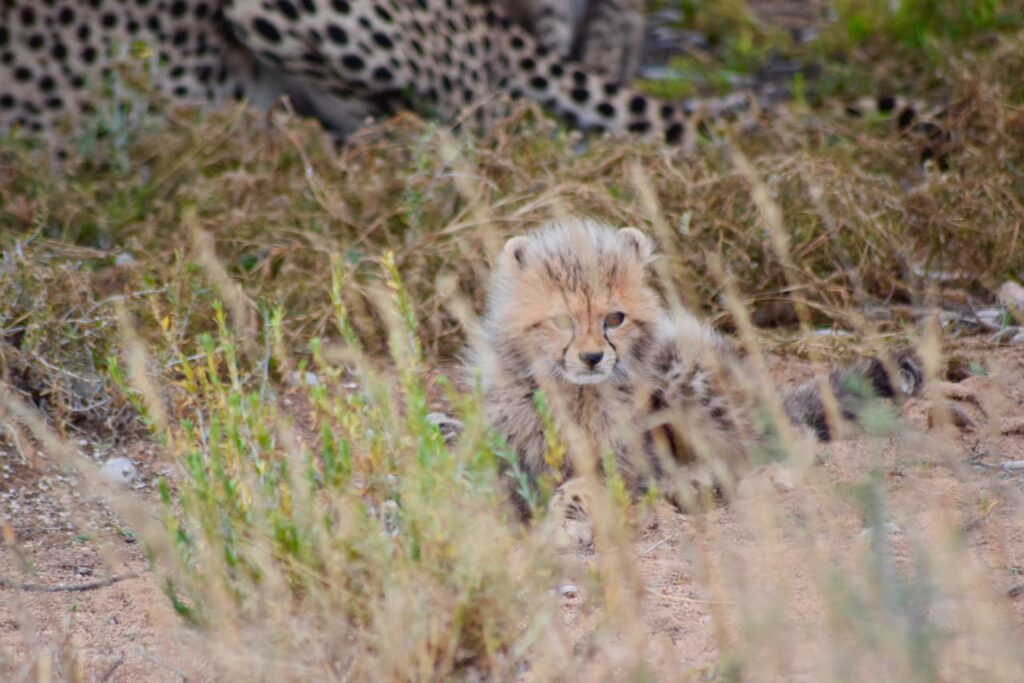
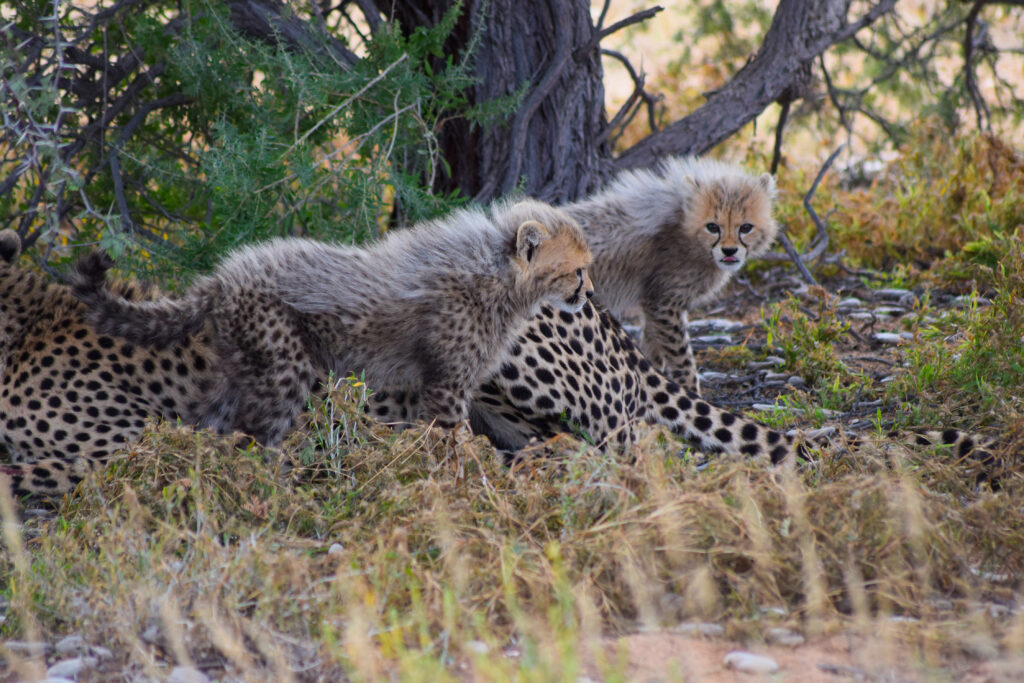
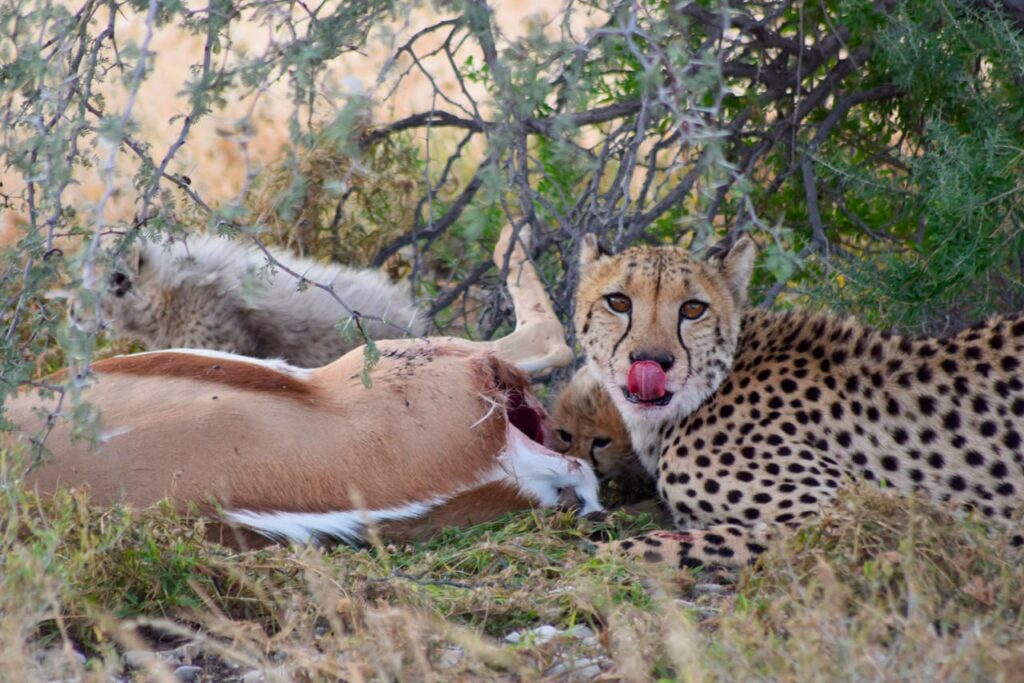
Camera shutters clicked constantly, while quiet sighs of admiration filled the vehicle. There was little need for conversation. We all knew we were witnessing something truly special.
Watching a successful hunt followed by a mother calling and leading her cubs back to feed is an exceptionally rare privilege in the arid wilderness of the Kgalagadi.
After nearly two unforgettable hours, we decided it was time to leave nature in peace and continue to Mata Mata. As we drove away, I couldn’t help but believe that she would keep her hard-earned prey safe from competitors and that her three cubs had been given another precious day to survive.
Days like these remind us why we keep returning to the Kgalagadi. Nature offers no guarantees, but every so often it rewards patience with moments that will remain etched in our memories forever.